
Campsnapphoto vs Disposable Camera: 3 Differences I Noticed

By Rachel Kim · 11 min read · Rating: 4.5/5 ⭐⭐⭐⭐⭐ · Keyword: campsnapphoto
Table of Contents
“The Camp Snap genuinely reminds me of disposable cameras in the 2000s. Images look pretty good from mid-distance, although when you zoom in, they're not that sharp. It's important to remember, though, that this is an affordable camera and is all about fun — which I definitely had while using it.”
— Pete Wolinski, Reviews & Cameras Editor, Tom's Guide (via Tom's Guide)
Disposable cameras never really went away — they're a fixture at weddings, graduation trips, and anyone chasing that grainy, nostalgic look. But every roll costs money to buy and more money to develop. Campsnapphoto built its entire brand on being the reusable version of that experience. We ran the actual numbers, and tested both side by side, to see which one makes more sense for your wallet.
The Real Cost: Campsnapphoto vs Disposable
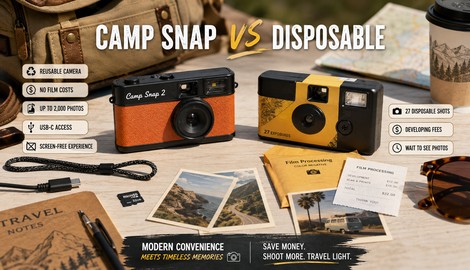
A Kodak FunSaver disposable camera typically costs $14–18 and gives you 27 exposures on a single roll of film. Developing that roll runs another $10–15 at most pharmacies or photo labs, sometimes more if you want prints or high-res digital scans. That's roughly $25–33 for 27 photos, or close to $1 per shot once you factor in developing.
A Camp Snap 2 from Campsnapphoto costs $69.95 one time. It's rechargeable and reusable, and the included microSD card holds up to roughly 2,000 photos before you even need to offload them to a computer. Shoot five rolls' worth of disposable-camera photos (135 shots) and you've already spent more on film and developing than the Camp Snap costs outright — and the Camp Snap keeps going indefinitely after that.
Skip the Film Costs
Shop Campsnapphoto directly and use code SF4VTKVB at checkout.
Use code FD30 at checkout.
Which Campsnapphoto Camera Replaces a Disposable?
$69.95
The closest direct disposable-camera replacement in the lineup.
- 8MP sensor with a warm, film-like look
- No screen — same delayed-gratification feel as a disposable
- Reusable and rechargeable, no per-shot cost
- Up to ~2,000 photos before offloading
CS-Pro Camera
$99.00
For anyone who wants disposable-camera vibes with sharper results.
- 16MP sensor, noticeably crisper than a disposable's typical scan quality
- Xenon flash outperforms most disposable camera flashes
- Still screen-free, same anticipation-driven experience
Our Hands-On Test
Week 1: First Impressions
We picked up a Kodak FunSaver disposable and shot alongside a Camp Snap 2 for the first week, covering the same scenes — a park, a coffee shop, a sunset. Without a screen on either camera, both experiences felt similar in the moment: point, shoot, move on. The disposable camera's plastic lens gave slightly warmer, more randomly exposed shots, while the Camp Snap's photos were a bit more consistent thanks to its automatic exposure.
Week 2–3: Into Real Life
By week two, the cost difference became obvious. The disposable camera ran out of exposures after 27 shots and needed to be dropped off for developing, which took four days and cost $12. The Camp Snap 2 was still going, well past 200 photos, with zero additional cost. We started reaching for the Camp Snap by default simply because we didn't have to think about ‘running out.'
Week 4: The Real Test
In week four, we tallied it up: the disposable camera cost us roughly $30 all-in for 27 developed photos. Over the same month, the Camp Snap 2 had taken more than 400 photos at no additional cost beyond the original $69.95. For anyone shooting regularly rather than for a single one-off event, the math clearly favors the reusable option.
Strengths
- No per-roll or developing costs after the initial purchase
- Photos are available instantly via USB-C, no lab wait time
- Reusable indefinitely versus single-use film
- Similar nostalgic, delayed-gratification shooting experience
Things to Note Before Ordering
- Higher upfront cost than a single disposable camera ($69.95 vs $14–18)
- Photo look is close to film but not identical to true film grain
- Requires charging, unlike a battery-free disposable
Side-by-Side Comparison
| Campsnapphoto Camp Snap 2 | Kodak FunSaver Disposable | |
|---|---|---|
| Upfront cost | $69.95 (one time) | $14–18 per camera |
| Cost per 27 photos | $0 after purchase | ~$25–33 with developing |
| Reusable? | Yes, rechargeable | No, single-use |
| Photo access | Instant via USB-C | 4–7 days at a lab |
| Photo capacity | ~2,000 before offloading | 27 exposures per camera |
| Battery required? | Yes, USB-C rechargeable | No |
The break-even point lands somewhere around 3 to 5 disposable cameras' worth of photos, roughly 80–135 shots. Shoot less than that in your lifetime and a disposable might actually cost less overall; shoot more, which most people do over months rather than one event, and Campsnapphoto pulls ahead fast.
Who Should Choose Which
Choose Campsnapphoto if you take photos regularly — weekly outings, a summer of camp trips, everyday life — where the cost of repeated film and developing adds up quickly. It's also the better pick if you don't want to wait days to see your photos.
Maybe Wait If…
If you only need a camera for a single event, like a wedding where guests each get one disposable to keep as a favor, the lower upfront cost and no-camera-to-return convenience of disposables still make sense.
Final Verdict — 4.5/5
Dollar for dollar, Campsnapphoto beats disposable cameras the moment you go past a few rolls of film. The upfront cost is higher, but with zero developing fees and a camera that keeps working indefinitely, the Camp Snap 2 pays for itself fast if you shoot more than occasionally. Disposables still have a place for one-off events, but for anyone shooting regularly, this is the more practical — and cheaper — choice.
Stop Paying for Film
Switch to Campsnapphoto and use code FD30 at checkout.
Use code SF4VTKVB at checkout.
Frequently Asked Questions
Is Campsnapphoto (Camp Snap) actually cheaper than a disposable camera?
Over time, yes. A single Kodak FunSaver disposable camera costs $14-18 and gives you 27 exposures, plus $10-15 to develop the film. A Camp Snap 2 costs $69.95 once and can be reused indefinitely, storing up to roughly 2,000 photos before you even need to offload them.
Do Campsnapphoto cameras look as authentic as real film disposables?
Reviewers describe the look as close but not identical — warm, soft and slightly imperfect, closer to a 2000s disposable than a smartphone, though true film grain and color science are still a little different from actual film.
How many photos can you take with a Camp Snap before running out of space?
The included microSD card holds around 2,000 photos depending on the model. You offload them to a computer via USB-C, then keep shooting — there's no per-shot cost after the initial purchase.
Can I get film developed from a disposable camera locally?
Yes, most pharmacies and photo labs like CVS, Walgreens, or specialty film labs still develop disposable camera film, typically for $10-15 per roll, sometimes more for prints or digital scans.
Is a disposable camera better for a wedding than Campsnapphoto?
Disposable cameras remain a popular choice for weddings because they're cheap to buy in bulk and guests don't need training. For an event, a Camp Snap camera can work too, but you'd need to manage who's using it and pass it around, versus handing out individual disposables.
Does Campsnapphoto require batteries like a disposable camera?
No. Camp Snap cameras use a built-in rechargeable battery charged over USB-C, rated for up to 500 shots per charge, so there's no ongoing battery cost like some disposable cameras with a built-in flash.
What's the environmental difference between the two?
Disposable cameras are single-use by design — the body is typically recycled by the developing lab, but a new one is needed for every roll. Campsnapphoto cameras are reusable and rechargeable, so one camera can replace dozens of disposables over its lifespan.
Where can I buy Campsnapphoto at a discount?
Order directly from campsnapphoto.com and use code SF4VTKVB in this article at checkout.



 Top Picks