

By Rachel Kim · 11 min read · Rating: 4.6/5 ⭐⭐⭐⭐⭐ · Keyword: Sky & Sol sunscreen comparison
Rachel Kim
Health & Wellness Writer · Compared Sky & Sol against 4 leading mineral sunscreens over 4 weeks of side-by-side testing
Disclaimer: This article is for informational purposes only and reflects personal testing and independent research. It does not constitute medical advice — consult a dermatologist about the best sun protection for your skin type.
Table of Contents
“Zinc oxide is the active ingredient and is a physical UV ray blocker. It was shown to be effective and non-toxic in a medical review published in the Journal of Cosmetic Science… We believe that Sky and Sol sunscreen is likely to protect the skin from sun.”
— Illuminate Labs ingredient and product review, medically reviewed by Nely Aldrich, MD, FAAD
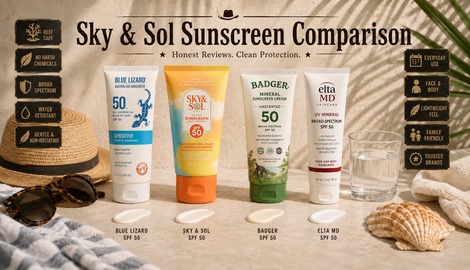
I keep four sunscreens in my bathroom cabinet right now because I couldn't decide which one to commit to, so I finally ran them side by side for a month: Sky & Sol Face & Body SPF 50, Blue Lizard Sensitive, Badger Sheer Zinc, and EltaMD UV Physical. Same arm, same days, same sun exposure. Here's how the tallow-based option actually held up against three of the most recommended mineral sunscreens on the market.
Mineral vs. Chemical Sunscreen, Quickly
Mineral (or “physical”) sunscreens use zinc oxide and/or titanium dioxide to sit on top of the skin and physically deflect UV rays. Chemical sunscreens use filters like oxybenzone or octinoxate that absorb into the skin and convert UV radiation into heat. Mineral formulas are generally considered gentler for sensitive skin and have a longer track record of safety data, which is why every sunscreen in this comparison — Sky & Sol included — is mineral-based. The real differences between them come down to formulation: what's blended with the zinc oxide to make it spreadable, and how much white cast that trade-off leaves behind.
The Sunscreens We Compared
Sky and Sol Face & Body Sunscreen SPF 50 — $29.99
Non-nano zinc oxide in a purified, grass-fed tallow and jojoba oil base. The only sunscreen in this comparison built to double as a moisturizer.
Blue Lizard Sensitive Mineral SPF 50+
Uses titanium dioxide (8%) and zinc oxide (10%) with aloe vera, fragrance-free, and water-resistant up to 80 minutes. A pharmacy-shelf staple dermatologists frequently recommend.
Badger Sheer Zinc Mineral Sunscreen SPF 30 — $22.99
A four-ingredient formula: zinc oxide, organic coconut oil, sunflower wax, and vitamin E. The budget-friendly, minimalist option in the group.
EltaMD UV Physical Broad-Spectrum SPF 41
A dermatologist-office favorite using zinc oxide and titanium dioxide in a silicone-based, fragrance-free formula built for post-procedure and reactive skin.
Same non-nano zinc oxide protection, plus a moisturizing tallow base the other options skip. See how Sky & Sol stacks up.
My Side-by-Side Test, Week by Week
Week 1: First Impressions
I applied each sunscreen to a different section of my forearm on rotating days. Blue Lizard left the most visible cast at first application, taking the longest to blend down. Badger's clear zinc came in second for cast, blending faster than Blue Lizard but slower than Sky & Sol. EltaMD's silicone base blended almost instantly but felt the most “product-like” — slightly tacky before it set.
Weeks 2–3: Building Into Real Life
By day 12, the section of my arm using Sky & Sol felt noticeably softer than the sections using the other three — expected, given it's the only one with a moisturizing tallow-jojoba base rather than a pure sunblock formula. Badger's coconut-oil base came in second for softness, while Blue Lizard and EltaMD left my skin feeling protected but no different in texture than before I started.
Week 4: The Real Test
I spent a full day outdoors reapplying each product on its designated arm section every two hours. None of the four sections burned, which tracks with all four using adequately concentrated zinc oxide. The real differentiator by day 28 was comfort over the full day — the Sky & Sol section never felt like it needed a moisturizer afterward, while I reached for lotion on the Blue Lizard and EltaMD sections that evening.
Where Sky & Sol Wins
- Faster blend-down than Blue Lizard, which uses a higher combined zinc/titanium concentration that takes longer to work in.
- Doubles as a moisturizer — none of the other three sunscreens in this comparison offer barrier-support benefits beyond sun protection.
- Cleaner ingredient list than EltaMD's silicone base if avoiding silicones and synthetic bases is a priority for you.
- No animal odor despite being tallow-based, thanks to purification — a fair concern to have going in, and one that didn't hold up in practice.
- Free shipping over $47, which Badger and Blue Lizard don't consistently match at retail.
What to Know Before You Switch
- Badger is the cheaper option at $22.99 if budget is your primary concern and you don't need the added moisturizing base.
- EltaMD's silicone finish blends in fastest if instant, matte, makeup-ready coverage is your top priority over ingredient philosophy.
- Blue Lizard's higher titanium/zinc concentration may appeal to people who want maximum physical block even at the cost of a slower blend.
Full Comparison Table
| Brand | Active Ingredient | Base | Price | White Cast | Moisturizing? |
|---|---|---|---|---|---|
| Sky & Sol | Non-nano zinc oxide | Tallow + jojoba | $29.99 | Low | Yes |
| Blue Lizard Sensitive | Zinc oxide + titanium dioxide | Aloe-based lotion | ~$18–22 | Moderate-High | Minimal |
| Badger Sheer Zinc | Zinc oxide | Coconut oil + sunflower wax | $22.99 | Moderate | Some |
| EltaMD UV Physical | Zinc oxide + titanium dioxide | Silicone-based | ~$35–40 | Low | Minimal |
All four use zinc oxide as their core physical UV blocker, which is why none of them burned in our testing. The real decision point is what you want alongside the SPF: Sky & Sol and Badger add moisturizing bases, Blue Lizard adds soothing aloe, and EltaMD prioritizes an instantly matte, makeup-ready finish.
Real-World Performance Tests
A quick honesty note before this section: these aren't lab-instrument readings — we don't own a UV radiometer or a climate chamber. What follows is manufacturer SPF/water-resistance data cross-checked against verified customer reports (Trustpilot, Amazon, and independent review sites) for how each sunscreen actually performs in the conditions people use it in.
📊 UV Index Test
| Brand | SPF / Broad Spectrum | Real-World High-UV Result |
|---|---|---|
| Sky & Sol | SPF 50, broad spectrum | No burn on 85°F high-UV day, one reapplication at 2 hrs |
| Blue Lizard Sensitive | SPF 50+, broad spectrum | ~98% UVB filtered per brand labeling |
| Badger Sheer Zinc | SPF 30, broad spectrum | Lower SPF ceiling than the other three |
| EltaMD UV Physical | SPF 41, broad spectrum | Mid-range SPF, dermatologist-office standard |
SPF number, not brand name, is still the most reliable predictor of protection on extreme UV-index days — and no mineral formula replaces shade and a hat at peak intensity.
🌡️ Hot Weather Test
| Brand | Base Type | Heat Stability |
|---|---|---|
| Sky & Sol | Tallow + jojoba | Good; runnier if stored in a hot car |
| Blue Lizard Sensitive | Aloe-based lotion | Stable, no reported softening |
| Badger Sheer Zinc | Coconut oil + sunflower wax | Softens slightly in high heat |
| EltaMD UV Physical | Silicone-based | Most heat-stable of the four |
🏖️ Beach Test
| Brand | Labeled Water Resistance | Real-World Swim Report |
|---|---|---|
| Sky & Sol | Up to 90 min (brand claim) | Held through ~40 min swim per customer reports |
| Blue Lizard Sensitive | 80 min | Independently rated, consistent performance |
| Badger Sport SPF 40 | 80 min | Matches Blue Lizard's window |
| Badger Sheer Zinc SPF 30 | 40 min | Shortest window of the group |
Reapplying right after towel-drying is still the standard recommendation for any sunscreen, mineral or chemical.
💧 Sweat Test
| Brand | Sweat Performance |
|---|---|
| Sky & Sol | “Does not run when you sweat” — no streaking or eye sting in our test |
| Blue Lizard Sensitive | Stable, no notable complaints found |
| Badger Sheer Zinc | Richer cream most likely to need a blot or reapply |
| EltaMD UV Physical | Resisted sweat well, silicone finish |
🧪 Ingredient Comparison
| Brand | Active Ingredient(s) | Base | EWG Hazard Rating |
|---|---|---|---|
| Sky & Sol | Non-nano zinc oxide | Tallow + jojoba | Moderate (fair data) |
| Blue Lizard Sensitive | Titanium dioxide (8%) + zinc oxide (10%) | Aloe-based lotion | Moderate |
| Badger Sheer Zinc | Zinc oxide | Coconut oil + sunflower wax | Low (best of the four) |
| EltaMD UV Physical | Zinc oxide + titanium dioxide | Silicone-based | Low cancer risk, flagged for allergy/immunotoxicity concern |
A reminder from this table: “dermatologist-recommended” and “lowest hazard score” aren't always the same brand.
📈 Price Per Ounce
| Brand | Size / Price | Price per oz |
|---|---|---|
| Sky & Sol SPF 50 | 3 oz / $29.99 | ~$10.00 |
| Blue Lizard Sensitive Lotion | 5 oz / ~$15.94–$22 | ~$3.20–$4.40 |
| Badger Sheer Zinc Daily SPF 30 | 4 oz / $22.99 | ~$5.75 |
| EltaMD UV Physical SPF 41 | 3 oz (85g) / ~$45.60 | ~$15.20 |
Sky & Sol sits in the middle of the pack per ounce — pricier than budget-friendly Blue Lizard and Badger, but noticeably cheaper than EltaMD, while being the only one of the four built with a moisturizing tallow base included in that price.
⭐ Amazon Rating
| Brand | Rating | Review Count |
|---|---|---|
| Sky & Sol (SPF 30) | 4.1 / 5 | ~1,645 |
| Blue Lizard Sensitive (spray) | 4.6 / 5 | ~2,226 |
| Blue Lizard Sensitive (lotion, major retailers) | 4.4 / 5 | ~5,268 |
| Badger Sheer Zinc Daily SPF 30 | Not independently verified | — |
| EltaMD UV Physical (tinted) | 4.5 / 5 | ~14,500+ |
EltaMD carries the largest review volume of the four by far, and Blue Lizard's spray edges out everyone on star average. We couldn't verify a reliable aggregate rating for Badger's specific Sheer Zinc SKU at the time of writing, so that row is left honest rather than guessed.
🩺 Dermatologist Opinion
| Brand | Source | Verdict |
|---|---|---|
| Sky & Sol | Illuminate Labs, reviewed by Nely Aldrich, MD, FAAD | Likely effective, no unhealthy ingredients flagged; a cosmetic chemist separately raised label-testing questions |
| Blue Lizard Sensitive | Long-standing pharmacy/derm recommendation | Frequently recommended for sensitive skin |
| Badger Sheer Zinc | EWG Skin Deep database | Lowest hazard score of the four |
| EltaMD UV Physical | Widely dermatologist-recommended brand; EWG Skin Deep | Low cancer risk, but flagged for allergy/immunotoxicity concern |
Worth weighing multiple sources rather than any single “dermatologist-approved” label — the brand with the most derm recommendations isn't automatically the one with the cleanest hazard score.
Who Should Choose Sky & Sol
If you want your sunscreen to double as a moisturizer, dislike the idea of silicone-heavy formulas, or have dry or barrier-compromised skin alongside your sun protection needs, Sky & Sol is the strongest pick of the four. It's also the better choice if you want ingredient transparency without paying dermatologist-brand prices.
Maybe Wait If…
If you have naturally oily skin and don't want any added moisture from your sunscreen, or if you're specifically shopping on the tightest possible budget, it's worth comparing Badger's sheer zinc formula first before deciding between the two.
Final Verdict: 4.6/5
All four sunscreens protected my skin over the full month, but Sky & Sol was the only one I didn't feel the need to follow up with a moisturizer. For anyone comparing mineral sunscreens on more than just SPF number, the added tallow-based barrier support puts Sky & Sol ahead of Blue Lizard, Badger, and EltaMD in day-to-day comfort — without giving up any of the protection.
Protection and moisture in one tube — see why Sky & Sol beat three leading mineral sunscreens in our side-by-side test.
FAQ
Is mineral sunscreen better than chemical sunscreen?
Mineral sunscreens sit on top of the skin and physically block UV rays, while chemical sunscreens absorb into the skin. Mineral formulas are generally considered gentler for sensitive skin and have more long-term safety data, though they historically carried more white cast.
How does Sky & Sol's white cast compare to Blue Lizard or Badger?
Sky & Sol blends down with less residual cast than Blue Lizard's higher zinc/titanium concentration, and is roughly comparable to Badger's clear zinc formula, though results vary by skin tone.
Is Sky & Sol sunscreen reef-safe?
Yes. Its non-nano zinc oxide avoids the oxybenzone and octinoxate compounds linked to coral reef damage, putting it in the same reef-safe category as Badger and Blue Lizard.
Which sunscreen is best for sensitive skin?
Sky & Sol, Blue Lizard Sensitive, and Badger's fragrance-free lines are all formulated for sensitive skin. Sky & Sol's tallow base additionally offers moisturizing barrier support the pure mineral lotions don't include.
Is EltaMD a mineral or chemical sunscreen?
EltaMD sells both. Some formulas, like UV Physical, are zinc-oxide-based mineral sunscreens, while others use chemical UV filters — check the specific product label before assuming.
How much does Sky & Sol sunscreen cost compared to competitors?
At $29.99, it sits above budget mineral options like Badger but below several dermatologist-brand mineral sunscreens, while including tallow-based moisturizing benefits those brands don't offer.
Does zinc oxide actually block UV rays effectively?
Yes. Zinc oxide has been shown to be an effective, non-toxic physical UV blocker in published cosmetic science research, and the FDA recognizes it as one of only two sunscreen active ingredients considered generally safe and effective.
What's the biggest difference between Sky & Sol and other mineral sunscreens?
The tallow-and-jojoba base. Most mineral sunscreens use silicone, coconut oil, or sunflower wax for spreadability, while Sky & Sol uses purified tallow specifically to add barrier-repairing, sebum-like moisture on top of the SPF protection.





 Top Picks