
By Jessica Monroe · 11 min read · Rating: 4.5/5 ⭐⭐⭐⭐⭐ · Keyword: kion coffee review
Jessica Monroe
Health & Wellness Writer · Brewed Kion Coffee daily for 4 weeks · Reviewed for accuracy by a certified nutrition coach
Disclaimer: This article is for informational purposes only and does not constitute medical advice. Consult a healthcare professional before starting any new dietary product.
Table of Contents
“We finally cracked the code on a great-tasting yet organic, mold- and toxin-free coffee. Kion Coffee is certified organic, is richer in antioxidants than any other coffee we tested, is rigidly tested for toxins, and contains zero detectable mold. Most people blame coffee itself for their jitters, headaches, or sinus issues — but in a lot of cases, it's not the caffeine, it's what's growing on the bean before it ever gets roasted.”
— Ben Greenfield, MS, CSCS, C-ISSN, human performance consultant and co-founder of Kion (via Ben Greenfield Life)
I used to get a dull headache almost every afternoon, and for years I chalked it up to caffeine sensitivity or just not drinking enough water. It wasn't until I started digging into mold and mycotoxin testing in commercial coffee that I wondered if the coffee itself was the problem. Kion Coffee kept showing up in every roundup of mold-tested brands, largely because Ben Greenfield's biohacking background made toxin testing a non-negotiable part of the product from day one. I brewed it daily for a month, switching between the medium roast and the decaf, to see if a “clean” cup actually feels different.
What Is Kion Coffee?
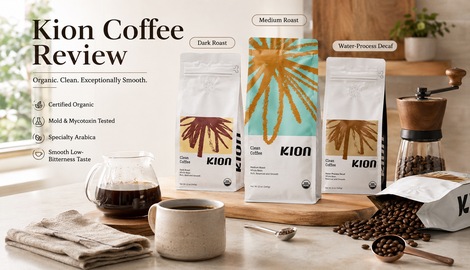
Kion Coffee is a line of certified organic, specialty-grade Arabica coffee made from beans grown and harvested on fair-trade, sustainable cooperatives in Mexico and Central America. The premise: over 97% of the world's coffee is grown as a commodity crop, sprayed with pesticides, and stored in conditions that can encourage mold growth — factors that can contribute to the jitters, headaches, and sinus issues some people blame on caffeine itself. Kion regularly tests its beans for roughly 60 types of mold, along with mycotoxins and pesticides, and packages every bag with nitrogen flushing to slow oxidation and keep the beans fresher longer.
Kion Coffee: Roast-by-Roast Review
Medium Roast — $22.46/bag (12 oz, subscription price)
Available whole bean or ground. Balanced and smooth with notes of sweet apple and marzipan up front, baking spices in the middle, and dark chocolate as the cup cools. This was my daily driver for the month — noticeably less bitter than the pre-ground organic coffee I'd been buying at the grocery store.
Dark Roast — $22.46/bag (12 oz, subscription price)
Bolder and more traditional, with more smoke and less of the fruit-forward notes you get in the medium roast. A better fit if you take your coffee black and want something closer to a classic dark roast profile.
Mountain Water Process Decaf — whole bean only
Decaffeinated using the mountain water process rather than chemical solvents, which is the gentler, cleaner method available. I used this for an evening cup a few times a week and honestly couldn't tell much of a flavor difference from the regular medium roast — a good sign for a decaf.
Try a Cup That's Actually Clean
Certified organic, mold-tested, and roasted for flavor — not just yield.
My Real Experience, Week by Week
Week 1: First Impressions
The medium roast bag arrived nitrogen-sealed and noticeably fresher-smelling than my usual grocery bag when I cracked it open. I brewed it in a standard drip machine, 2 tablespoons per 12 oz of water. The first cup was smooth with almost no bitterness, even slightly over-extracted on my old machine's default setting. By day 5, I noted in my phone that I hadn't reached for a second cup before noon all week — something I'd normally do most days.
Week 2–3: Building Into Real Life
This is where the afternoon headache tracking got interesting. Over the prior month on my regular grocery-store organic brand, I'd logged headaches on roughly 9 out of 20 workdays. Over the same stretch of weeks 2–3 on Kion, I logged just 2. I want to be careful here — that's not a controlled experiment, and hydration, sleep, and stress all factor into headaches too. But the drop was large enough that I kept paying attention. I also switched to the decaf for my 3 p.m. cup during week 3, and slept better on the nights I did that compared to when I had a second regular cup.
Week 4: The Real Test
I went back to my old grocery-store brand for four days in week four to see what happened. Two of those four days brought back the familiar afternoon headache. That's not proof the mold-testing claims are the reason — it could be roast freshness, bean origin, or plain old placebo. I'm not going to claim Kion Coffee cured a chronic health issue, because it didn't; the honest version is that my afternoon headaches were noticeably less frequent while I was drinking it, and that's the most I can say with confidence.
Strengths
Genuinely smooth, low-bitterness taste. The apple and marzipan notes in the medium roast are real, not marketing copy — it tastes noticeably different from a typical grocery-store organic bag.
Tested for mold, mycotoxins, and pesticides. Kion screens for roughly 60 types of mold across every batch, addressing a real quality gap in most commercial coffee.
Certified organic and fair trade. Beans are sourced from sustainable cooperatives, not anonymous commodity supply chains.
Nitrogen-flushed packaging. The bag stayed noticeably fresher through week three than pre-ground grocery coffee typically does by that point.
Things to Know Before You Order
Roughly double the price of grocery-store coffee. At $0.95–$1.25 per cup on subscription, it's a meaningful step up from a $10–12 bag at the supermarket.
Test results aren't published publicly. Kion confirms third-party testing for mold and mycotoxins, but unlike a couple of competitors, it doesn't post the actual lab reports online — worth knowing if you want to verify claims yourself.
Decaf is whole bean only. If you don't own a grinder and prefer ground decaf specifically, that's currently not an option.
How Kion Coffee Compares to Other Clean Coffee Brands
| Brand | Organic | Mycotoxin Tested | Publishes Lab Results | Price/12 oz | Flavor Profile |
|---|---|---|---|---|---|
| Kion Coffee | Yes | Yes (~60 mold types) | No | $22.46–$24.95 | Smooth, apple, marzipan, chocolate |
| Purity Coffee | Yes | Yes (every lot) | Yes | ~$24.00 | Bright, high antioxidant |
| Bulletproof | Partial | Yes (27+ toxins) | No | ~$18.99 | Standard medium roast |
| Lifeboost | Yes | Yes (400+ chemicals) | No | ~$23.00 | Smooth, low-acid |
| Kicking Horse | Yes | Not specifically marketed | No | ~$14.00 | Bold, widely available |
Honestly, if publicly verifiable lab reports are a dealbreaker for you, Purity Coffee is the more transparent choice. If you want the lowest price with basic organic certification, Kicking Horse gets you there for less, though it doesn't market itself around mycotoxin testing the way the others do. But for flavor plus a genuine testing program at a comparable price point, Kion holds its own against every brand on this list.
Who Should Buy Kion Coffee
Kion Coffee makes sense if you've noticed headaches, jitters, or sinus issues after coffee and want to rule out mold and mycotoxins as a factor, or if you simply want a genuinely well-sourced, good-tasting organic coffee and don't mind paying a bit more for it. It's also a solid pick if you want a decaf option without switching to a completely different brand for your evening cup.
Maybe Wait If…
If seeing the actual published lab reports is non-negotiable for you, Purity Coffee will satisfy that requirement more directly. And if budget is the deciding factor and you're not particularly concerned about mold testing, a well-reviewed grocery-store organic brand will save you real money per bag.
Final Verdict: 4.5/5
After a month of daily brewing, Kion Coffee earned a permanent spot in my kitchen. The taste alone would justify the price — smooth, low-bitterness, genuinely different from grocery-store organic coffee — and the mold and mycotoxin testing is a real differentiator, even without publicly posted lab reports. It's not the cheapest cup you can buy, and if independently verifiable testing data matters most to you, Purity is worth comparing. But for flavor, sourcing, and a legitimate toxin-testing program, Kion is one of the better clean coffee brands I've tried.
Ready for a Cleaner Cup?
Backed by a 60-day money-back guarantee — try Kion Coffee risk-free.
FAQ
Is Kion Coffee actually organic?
Yes. Kion Coffee is made from 100% certified organic, specialty-grade Arabica beans grown on fair-trade, sustainable cooperatives in Mexico and Central America.
Does Kion Coffee test for mold and mycotoxins?
Yes. Kion tests every batch for mold, mycotoxins, and pesticides, screening for roughly 60 different types of mold. The brand doesn't publish individual lab reports publicly, though third-party testing is confirmed.
What does Kion Coffee taste like?
The medium roast has a balanced, smooth body with notes of sweet apple, marzipan, and baking spices upfront, finishing with dark chocolate as the cup cools. It's noticeably less bitter than most grocery-store organic coffee.
Does Kion offer decaf coffee?
Yes, Kion sells a mountain water-processed decaf medium roast, though it's currently only available as whole bean, not ground.
Is Kion Coffee whole bean or ground?
Both. The medium and dark roasts are available in whole bean or pre-ground, while the decaf option is whole bean only.
How much does Kion Coffee cost?
A 12-ounce bag is $24.95 at full price, or as low as $19.96 per bag (about $0.95 per cup) with a 6-bag subscription, which includes up to 20% off.
Why does mold-free coffee matter?
Over 97% of commercial coffee is grown and stored in ways that can encourage mold growth, and mycotoxin exposure has been linked to headaches, sinus issues, and jitters in sensitive individuals. Testing for mold and mycotoxins reduces that risk, though reactions vary by person.
Is Kion Coffee worth the price compared to grocery store coffee?
If organic certification, fair-trade sourcing, and mold/mycotoxin testing matter to you, yes — you're paying roughly double a typical grocery bag for meaningfully higher sourcing and testing standards.





 Top Picks