
SolarisJapan Tariffs Review 2026: My Order Got Held at Customs. Here’s What I Learned.

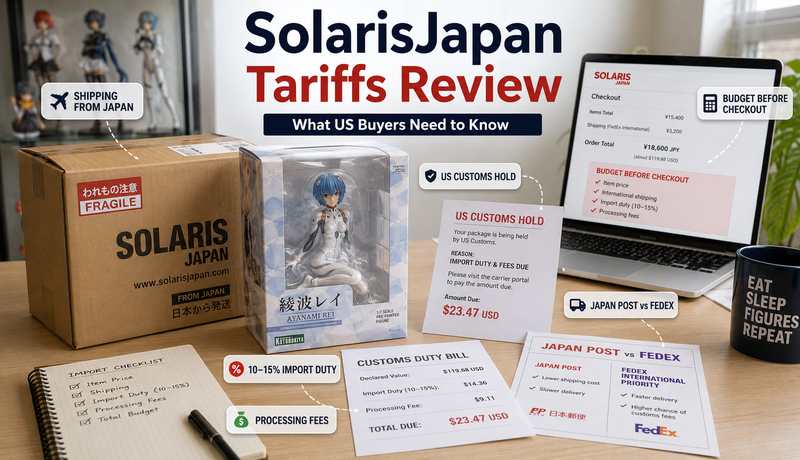
By Maya Okonkwo, Cross-Border E-Commerce & Customs Compliance Consultant · 11 min read · Rating: 4.5/5 ⭐⭐⭐⭐⭐ · Keyword: SolarisJapan Tariffs
“What I tell clients buying from sellers like SolarisJapan is that the tariff itself is rarely the surprise — it's the processing and brokerage fees layered on top that catch people off guard, especially when a carrier switch from Japan Post to FedEx happens mid-order. SolarisJapan has actually handled the 2025-2026 disruption better than most small-to-mid sellers I track: they communicate proactively about service suspensions, they hold orders rather than ship them straight into a customs black hole, and their support team responds to documentation issues instead of leaving customers to deal with CBP alone. My honest caveat is that no seller — SolarisJapan included — can give you a guaranteed final cost before a parcel is weighed and processed. Budget for the worst case, not the best case.”
— Maya Okonkwo, Cross-Border E-Commerce & Customs Compliance Consultant, advises small e-commerce sellers on US import compliance
Why My Order Got Held at Customs
I'd ordered from SolarisJapan twice before without a hitch — a couple of figures, nothing dramatic, duties paid on delivery, done. So when I placed a larger order in early 2026 — four items, just over $400 in declared value — I expected the same routine. Instead, I got an email three weeks later: my parcel was sitting in a bonded warehouse because the courier needed additional documentation to calculate the duty owed, and nothing would move until that was resolved.
If you've followed any of the news about de minimis exemptions disappearing, IEEPA tariffs getting struck down by the Supreme Court, and then a new flat tariff rate showing up weeks later — you already know 2025 into 2026 has been a genuinely confusing period for anyone importing from Japan. I went down the rabbit hole of figuring out exactly what changed, what SolarisJapan does and doesn't control, and what I should have done differently. This is that breakdown.
SolarisJapan & the 2026 US Tariff Landscape, Explained
SolarisJapan is a Japan-based proxy and reseller specializing in anime figures, collectibles, and merchandise — sourcing directly from Japanese retailers and manufacturers and shipping internationally. For years, the appeal for US buyers was straightforward: order under $800, pay no duty thanks to the de minimis exemption, and the only real cost was shipping itself.
That changed on August 29, 2025, when an executive order suspended the $800 de minimis exemption globally — not just for China, where the policy first tightened, but for every country, including Japan. From that date forward, every commercial shipment into the US, regardless of declared value, became subject to duties and formal or informal customs entry.
The tariff rate itself has been a moving target. Through most of 2025, Japan-origin goods faced tariffs tied to IEEPA (International Emergency Economic Powers Act) authority — rates that climbed as high as 25% on general goods. In late 2025, the Supreme Court ruled those specific IEEPA tariffs illegal. The administration responded almost immediately with a replacement: a new flat global tariff of roughly 10-15%, introduced via Section 122 of the Trade Act of 1974, effective from February 24, 2026. For postal shipments specifically, a tiered flat-fee structure now applies based on the origin country's effective tariff rate — and Japan generally falls in the lower-to-middle tier.
Here's the part that matters most for SolarisJapan customers specifically: in August 2025, Japan Post temporarily suspended EMS, Regular Airmail, and Saver Seamail service to the United States entirely, in response to the de minimis change. SolarisJapan held any order over $100 in value at their warehouse during the suspension rather than risk it getting stuck or lost in transit. Service resumed on April 14, 2026. During the gap, SolarisJapan offered FedEx as an alternative — at the cost of higher, less predictable import taxes that couldn't be confirmed until the order was packed and weighed.
Cost Breakdown: Tariffs, Fees & Shipping Methods
① The Tariff Itself
Current rate: Roughly 10-15% of declared customs value (item cost, generally excluding shipping unless you declare shipping value separately at checkout).
Who calculates it: US Customs and Border Protection (CBP) — not SolarisJapan. The rate is tied to the country of origin (Japan) and the current IEEPA/Section 122 schedule, which has changed multiple times in the past year.
Who collects it: The shipping carrier (Japan Post, FedEx, or DHL) at or before delivery — usually as a separate payment request, not bundled into your SolarisJapan order total.
② Additional Fees on Top of Tariffs
Merchandise Processing Fee (MPF): A standard CBP fee applied to formal entries, typically a small percentage of the shipment's value with a minimum charge.
Carrier brokerage fees: Most significant on FedEx and DHL shipments, where the carrier acts as your customs broker and charges a separate processing fee — often $20-40+ depending on the shipment's complexity.
Japan Post fees: Generally lower than FedEx/DHL brokerage, since Japan Post shipments are more frequently processed as simpler postal entries rather than formal commercial entries.
③ Shipping Method Comparison
EMS (Japan Post Express): ~1-2 weeks to US, moderate cost, good tracking, resumed service April 2026.
ePacket / Regular Airmail: ~2-4 weeks, lowest cost, basic tracking.
Saver Seamail: Up to 13 weeks, cheapest option, minimal tracking — only for non-urgent, low-value orders.
FedEx: Fastest (3-7 days), highest cost, final price only confirmed after packing/weighing, higher brokerage fee exposure.
Want to actually understand your order before you commit?
SolarisJapan's support team responds directly to documentation and customs questions — something a lot of import sellers won't do. If you're ordering Japanese figures or collectibles, knowing the real landed cost upfront saves you the surprise I had.
What Actually Happened to My Order, Step by Step
Placing the Order
Four figures, declared value just over $400, shipped via EMS once Japan Post resumed service. Checkout was identical to my previous orders — no tariff line item, no warning that anything had changed. That's accurate to how SolarisJapan operates: the tariff isn't theirs to charge, so it doesn't show up on their invoice. I should have anticipated this gap, but I didn't think to check the current de minimis status before ordering, which in hindsight was the actual mistake.
The Hold
Three weeks in, tracking stalled at a US logistics hub. I emailed SolarisJapan support, and they responded within a day confirming the parcel was likely held for customs documentation review — a known pattern they'd seen with larger, multi-item orders since the de minimis suspension. They couldn't directly intervene since the hold was on CBP/carrier side, not theirs, but they gave me the tracking reference to follow up with the carrier directly and stayed responsive throughout.
The Bill
Eventually I received a notice from the carrier with a duty assessment: roughly 12% of declared value, plus a processing fee. Total additional cost landed around $58 on top of my original $400+ order — not catastrophic, but also not nothing, and definitely not something I'd budgeted for since I hadn't checked current policy before ordering. Paid it, parcel released within 48 hours, delivered four days later.
What SolarisJapan Does Well on Shipping & Transparency
- Proactive communication during policy disruptions: When Japan Post suspended US service in August 2025, SolarisJapan held affected orders rather than shipping into uncertainty, and posted clear public updates as the situation evolved.
- Order combining to reduce shipping costs: If you have multiple open orders, support will merge them into a single shipment on request — reducing redundant shipping charges, with any savings refunded as store credit.
- Flexible shipping method options: EMS, ePacket, Saver Seamail, and FedEx give you a genuine choice between speed and cost depending on your priorities.
- Responsive support for delivery and customs issues: Multiple customer accounts (including my own) confirm support actually engages with documentation and delivery problems rather than deflecting to “contact the carrier” with no further help.
- Honest framing on what they can't control: SolarisJapan's help pages are direct about the fact that duties are a CBP determination, not something they set or can predict precisely — which, while not what anyone wants to hear, is more honest than sellers who imply they can guarantee a final landed cost.
What to Know Before You Order
- No tariff estimate at checkout: Your SolarisJapan invoice will not include or estimate the duty you'll owe — you need to calculate this yourself based on current CBP policy, which has changed multiple times in the past year.
- Larger orders are more likely to face documentation holds: Multi-item orders crossing into formal entry territory see more customs friction than single, lower-value items.
- FedEx pricing isn't confirmed until after packing: If Japan Post isn't available or you choose FedEx, you won't know your final shipping + tax cost until your order has already been packed and weighed.
- Refusing to pay duties means losing your shipping cost: If you decline to pay the assessed duty, the parcel returns to Japan, and outbound shipping fees are non-refundable — so budget before you order, not after the bill shows up.
- Investigation timelines for lost packages can run up to 3 months: If a shipment goes missing rather than just delayed, SolarisJapan's investigation process with Japan Post has no fixed timeframe and compensation is paused until it resolves.
- Policy volatility means today's numbers may not hold: Given how much the tariff rate has shifted within a single year, treat any specific percentage as a snapshot, not a guarantee.
SolarisJapan vs. Other Japan Import Sellers
| Seller | Tariff Shown at Checkout | Order Combining | US Shipping Methods | Support Responsiveness |
|---|---|---|---|---|
| SolarisJapan | ❌ Not included | ✅ Yes, on request | EMS, ePacket, Saver, FedEx | ✅ High |
| Nishohi | ✅ Included in price (flat 10%) | ⚠️ Limited | Standard postal | ⚠️ Moderate |
| AmiAmi | ❌ Not included | ⚠️ Strict cancellation rules | EMS, SAL | ⚠️ Mixed (per user reports) |
| Japanese Green Tea Shops | ❌ Not included | ⚠️ Limited | Japan Post only | ✅ High (proactive updates) |
Sellers like Nishohi that bake the tariff into the displayed price offer more upfront certainty — you genuinely know your total cost at checkout. SolarisJapan's tradeoff is that you carry more pricing uncertainty, but in exchange you get more shipping method flexibility (including the FedEx fallback when Japan Post is disrupted) and consistently responsive support when something goes wrong with a shipment. For collectors who order frequently and want options, SolarisJapan's model works; for one-off buyers who want a guaranteed all-in price, a tariff-inclusive seller removes a layer of math.
5 Ways to Reduce Your Tariff & Shipping Costs
- Combine orders before they ship. Contact support to merge multiple open orders into one shipment — this cuts down on duplicate shipping charges and any overage gets refunded as store credit.
- Calculate your expected duty before checkout. Multiply your declared item value by the current rate (~10-15% as of early 2026) and add a buffer for MPF — don't let the bill be a surprise.
- Default to Japan Post over FedEx when available. Lower brokerage fee exposure and more predictable total cost, even if delivery takes longer.
- Keep individual orders smaller when possible. Smaller declared values are statistically less likely to trigger the documentation holds that delayed my own order.
- Watch official policy updates, not just seller pages. Tariff rates have shifted multiple times in the past year — checking CBP and White House trade announcements directly gives you a more current picture than relying solely on any single seller's page.
Who Should Order From SolarisJapan
- Repeat collectors who order regularly and benefit from order-combining and shipping method flexibility over time.
- Buyers comfortable doing their own duty math who'd rather have shipping options than a single bundled price.
- Anyone who values responsive support over guaranteed pricing — SolarisJapan's track record on customer service during the 2025-2026 disruption has been genuinely solid.
- People ordering smaller, single-item parcels who want to minimize the chance of a customs documentation hold.
⭐ Final Verdict: SolarisJapan Tariffs & US Shipping
SolarisJapan handled a genuinely chaotic 12 months of US tariff policy about as well as a seller in their position could. They didn't pretend to control what they don't, communicated clearly when Japan Post suspended service, and their support team showed up when my order got stuck. The actual frustration in my experience wasn't with SolarisJapan — it was with not doing my own homework on current duty rates before I placed a larger order.
If you're ordering from SolarisJapan in 2026, the single most important habit is this: check the current tariff rate and de minimis status before you check out, not after a bill shows up from the carrier. Budget roughly 10-15% on top of your order value for duties, plus a modest processing fee, and you'll rarely be caught off guard.
Rating: 4.5 / 5.0 — A solid, transparent seller operating in a genuinely difficult regulatory environment. Recommended for collectors who do a little homework before ordering.
Now that you know what to expect, ordering is the easy part.
SolarisJapan's catalog, flexible shipping options, and responsive support make them a solid choice for Japan-sourced figures and collectibles — as long as you budget for duties upfront.
Frequently Asked Questions
Does SolarisJapan charge tariffs on orders shipped to the US?
No — duties are assessed by US Customs (CBP) and collected by the carrier (Japan Post, FedEx, or DHL), not added to your SolarisJapan invoice. Since August 2025, every US shipment is subject to duty regardless of value, and as of February 2026, Japan-origin goods generally fall in the 10-15% tariff range.
Why did my SolarisJapan order get held at customs?
Usually incomplete documentation needed for CBP to calculate duty — more common on larger, multi-item orders. Single-item orders under roughly $100 generally clear with fewer issues.
How much will I actually pay in tariffs on a SolarisJapan order?
Roughly 10-15% of declared customs value as of early 2026, plus MPF and any carrier brokerage fees. For a $150 item, budget $15-25 in tariffs plus $0-30 in fees depending on the carrier.
Is Japan Post or FedEx better for SolarisJapan orders to the US?
Japan Post is generally cheaper with more predictable fees and resumed full US service in April 2026. FedEx is faster but carries higher, less predictable cost — final price isn't confirmed until your order is packed and weighed.
Can I combine multiple SolarisJapan orders to save on shipping and tariffs?
Yes — contact support before orders are dispatched to merge them into one shipment, reducing duplicate shipping charges. This doesn't lower the tariff rate, since duty is calculated on the combined declared value.
What happens if I refuse to pay the import duties on my order?
The parcel returns to Japan, return shipping fees apply (non-refundable), and any refund is processed only after the parcel arrives back at SolarisJapan's warehouse. Budget for duties before ordering, not after.
Will US tariffs on Japan imports go up again in 2026?
Possibly — rates have already changed multiple times within a single year, from 25% IEEPA tariffs to a Supreme Court reversal to a new flat 10-15% rate in February 2026. The de minimis suspension itself appears to be a fixed policy going forward.


 Top Picks